Thursday, March 13, 2008

There's a new bug in town

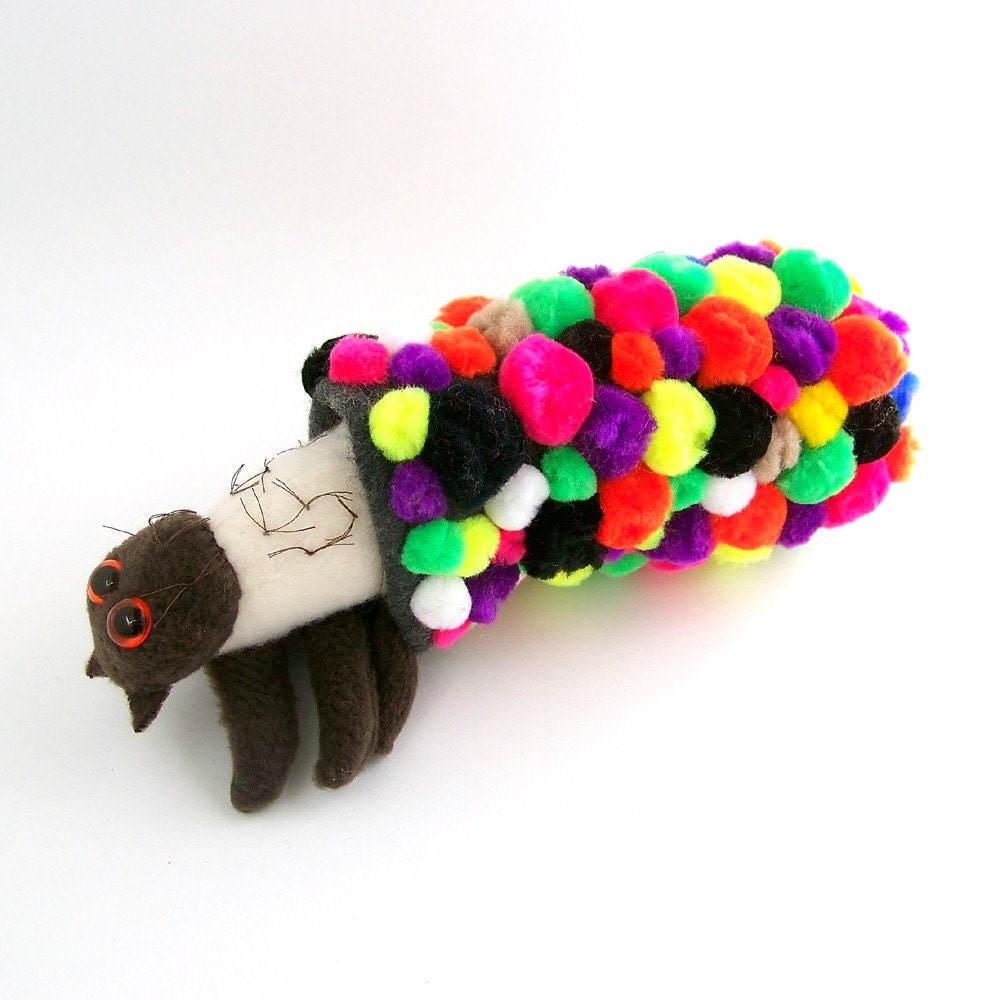
And her name is Candice the caddisfly larvae!Caddisflies are in the order Trichoptera, closely related to Lepidoptera (butterflies and moths). In fact, the adults slightly resemble moths, holding their hairy wings tent-like over the body. They are most well known for the interesting, case building habits of their larvae. They live on the bottoms of fresh water streams. The larvae have three main strategies: build nets/retreats to capture food, build a portable protective case, or to be free living (though all types build a case to pupate in). Candice here is based off of a case-building caddisfly. They use a special silk to put materials together, such as rocks, twigs, and leaves. Each species uses a different type of material in a different way. An example of some cases (picture from this website)
They are also important to consider when determining the quality of water in streams. Their presense and abundance, along with insects such as mayflies and stoneflies, can help give an estimate of the health of the ecosystem.

Wednesday, March 12, 2008

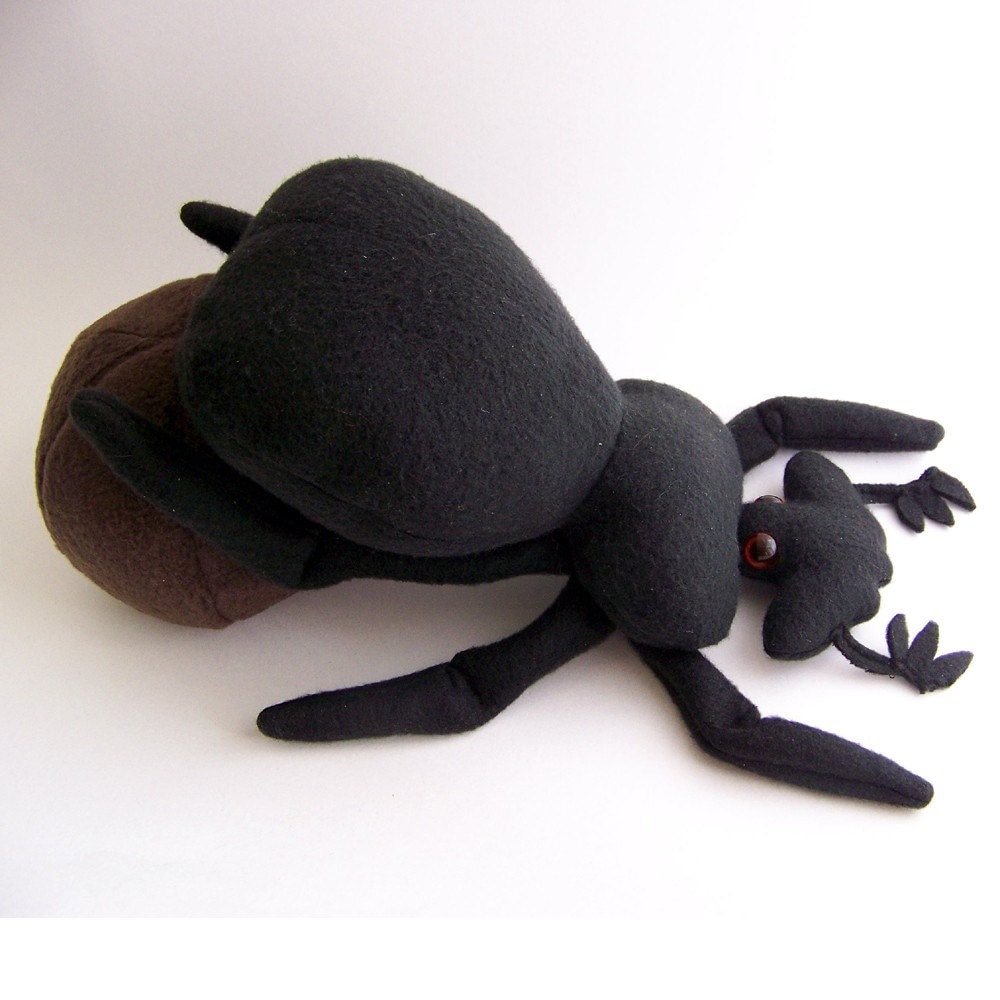
It's a DUNG BEETLE!

Congrats to all those who guessed correctly! As far as the drawing, I accepted scarab beetle, beetle, or any other kind of beetle, as a correct answer (you can now see the comments on the previous post).

The winner is... polkadotandpersian! One of my baby monsters will be on its way to you soon.

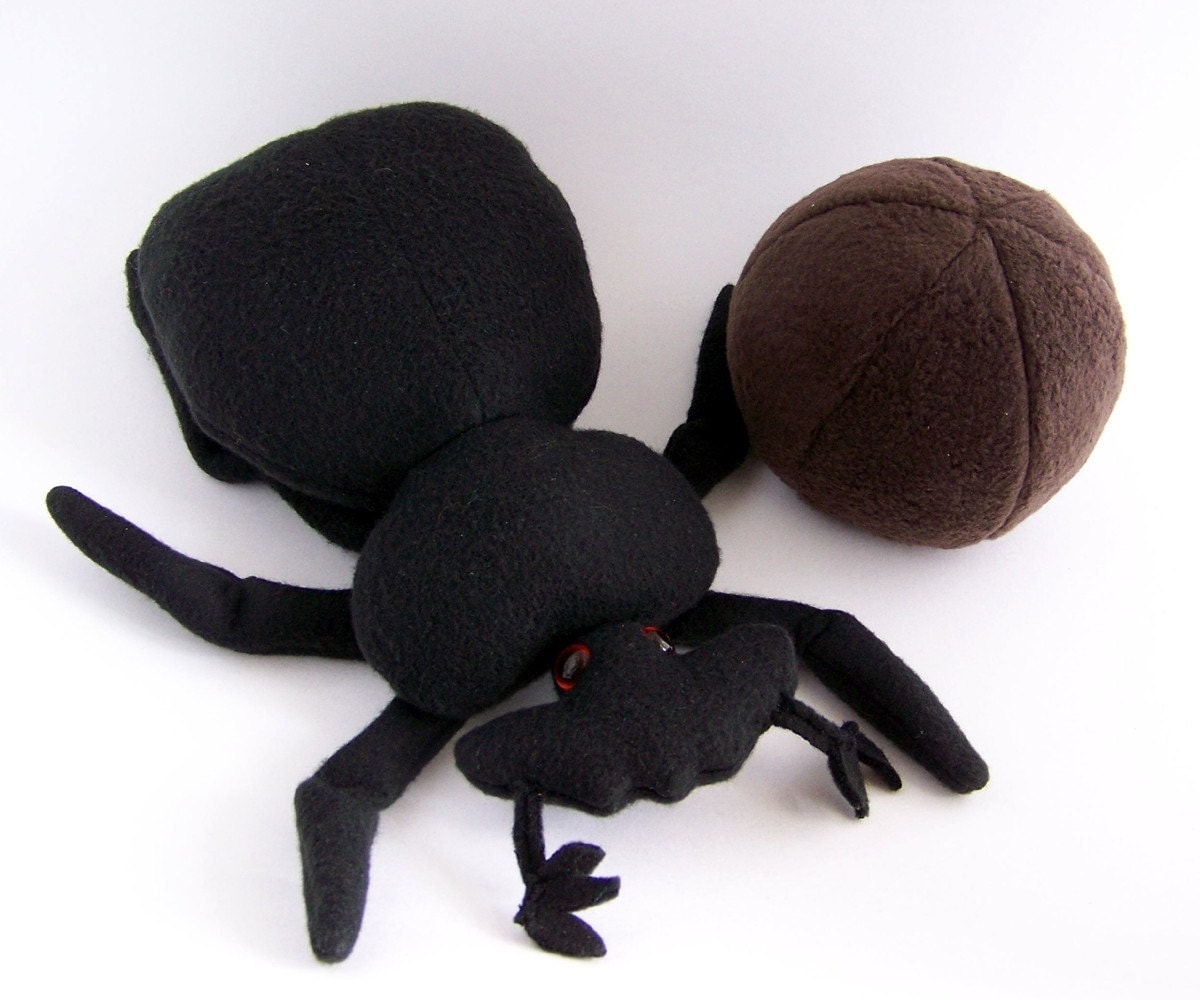
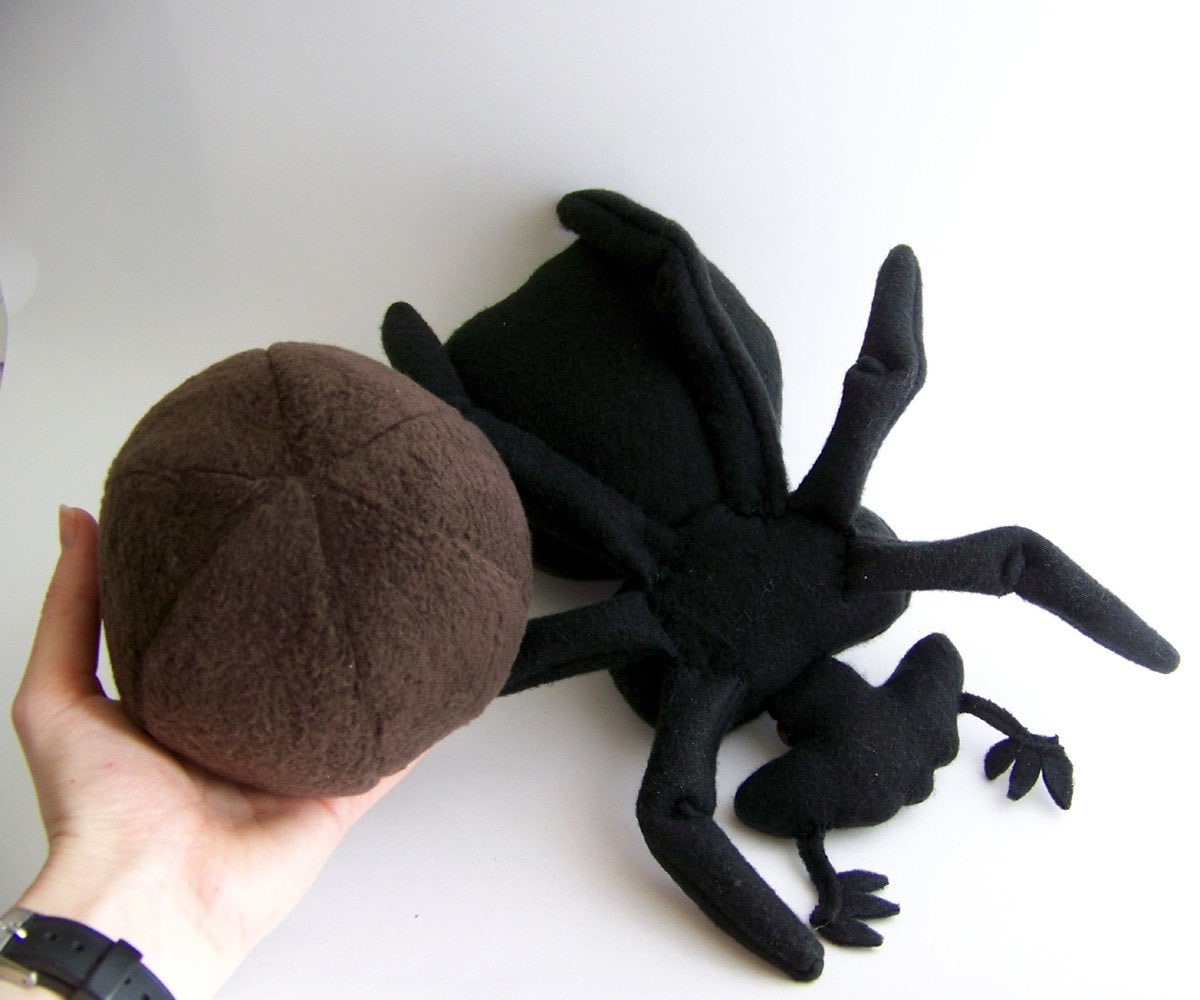
And now, for the rest of the beetle pictures! Many people guessed ant, but the antennae are the giveaway. Many beetles have lamellate antennae (the fringes at the end), while ants only have geniculate (kind of like an elbow) antennae. He does have a funny head, which some species are known to have.

His name is Danny, and he's for sale here!They are amazingly important little critters, along with the vast array of insects that act as the clean up crew of the world. Bacteria and microbes do most of the work of turning organic matter back into basic materials, but the insects are needed to break things down into manageable bits, or to bury them in the earth. Dung beetles eat dung, or roll it up into balls to bury in the soil. These serve as either stored food sources, or as brooding chambers for their young.

Monday, March 10, 2008

CONTEST!!!

A sneak preview of my latest creation!
Can you guess what it is???

I know it's a plushie, but what IS IT???

All correct answers will be entered into a drawing to win one of my baby monsters:
Names will be written on slips of paper, placed in a bowl, and chosen at random by my roomate. The baby monster will be chosen at random by me.

Just comment on this post with your guess (please be as specific as possible), along with either your etsy name or your email address so I may contact you if you win.

Ends at 8pm (EST) Wednesday (3/12) Good luck!

*edit* Thankfully, a NICE HONEST PERSON alerted me that when you click on the picture, it gave the filename, which included the name of the thing. I was wondering why I was getting so many confident guesses. So the filename is changed.

Sunday, March 9, 2008

My latest creation

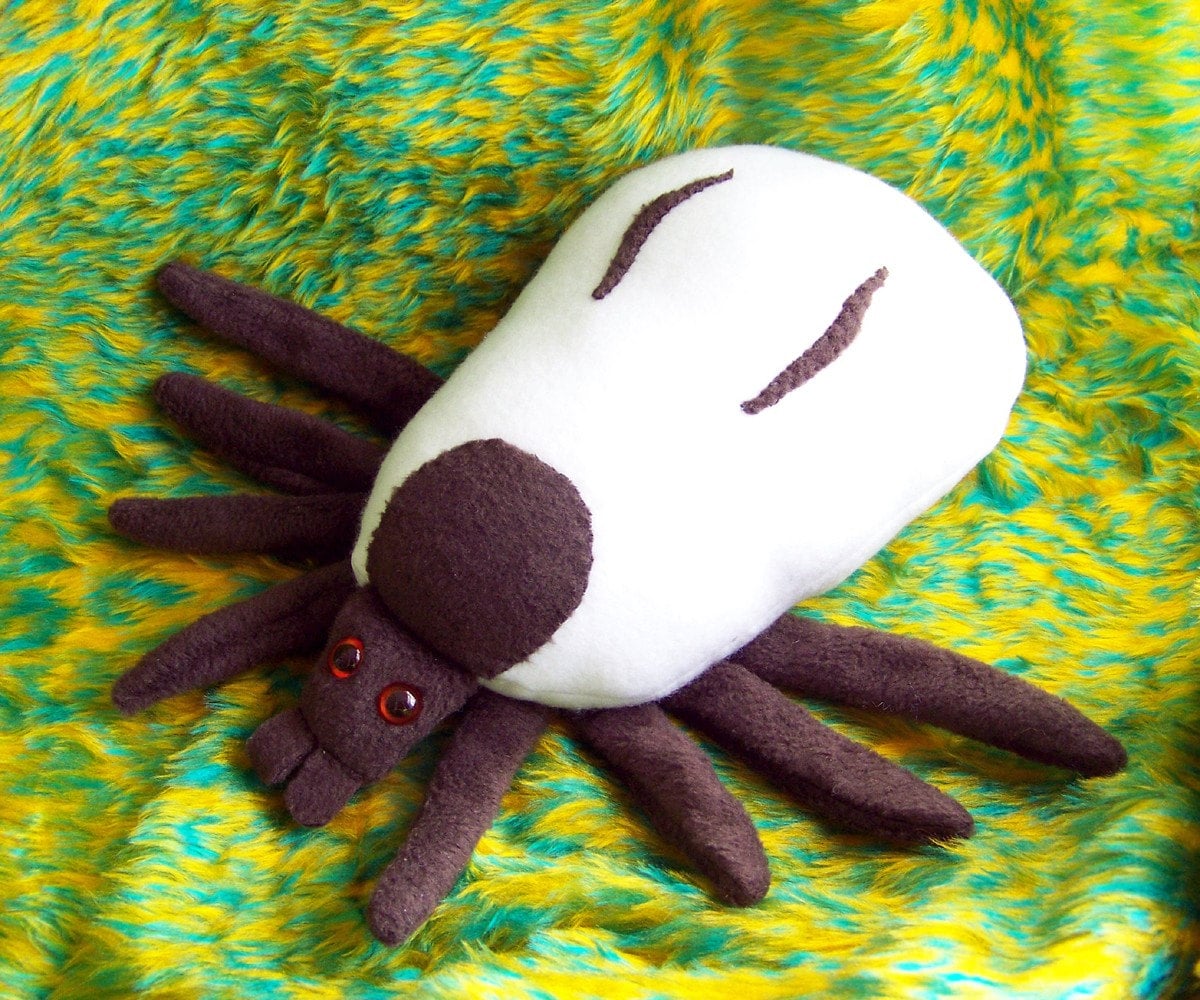
I am so tickled by how this turned out. Meet Tammy the Tick!
She's made from white and brown fleece, amber safety eyes, and filled with polyfil. As with my other lovelies, she's for sale in my etsy shop.

Ticks are arachnids, related to spiders (hence the eight legs). Tammy is a fat happy dog tick, and don't worry, she's not carrying any diseases.

Froggy fun (and mutations!)

Harold welcomes you!

May he rest in peace. He was only half an inch long when I caught him several years ago, fed him by sweeping my net in the field across the street for little flies, leafhoppers, grasshoppers and caterpillars. He lived for several years before I left him with a friend when I left for college. He reached maturity soon after, and started chirping every night! She would send me pictures of him often. He ended up dying of old age. I really miss that little guy.

Another gray treefrog story: this is Lucifer He lived behind a board leaning against one of our sheds in our backyard. He lived in the same spot for three summers in a row! I'd visit him often, sometimes taking him for a ride on my shoulder around the yard. I would catch grasshoppers for him, though I never kept him as a pet. It was much more fun finding him there every day. He was also really good about letting me take pictures of him.
Treefrogs are awesome, but back home I also have a wonderful pond full of bullfrogs, green frogs, pickeral frogs, leopard frogs, and maybe more!My butterfly net, made by my grandfather, had multiple purposes. One of them included capturing frogs (as well as anything else that looked interesting in the pond). It was always a fun challenge, and I'd spend nearly every summer day circling the pond. Once I reached my mid-teens and had some money, I bought myself some high quality nets from BioQuip, one butterfly net and one pond net. It had really stunk when my net was all wet, and I saw a butterfly fly by! (My butterfly collection has been photoshopped a bit and is the "banner" at the top of the page).

There is so much that could be said about frogs, and I'd like to take a look at mutations, like this one (A plushie I have made and sold):
There have been many theories about the apparant rise of multiple legs and other deformities in frogs. They're generally known to be environmental indicators, among the first organisms to be adversely affected by pollution and other changes (several other amphibians and insects also work this way). When their numbers start declining, people should take notice before it gets too late.

I've read a book called A Plague of Frogs which I highly recommend. It's accessible to an average reader while still providing good scientific information. They conjecture that pesticides are the most likely culprit for the rash of deformities. This is quite likely, considering we don't know all the affects pesticides could have on animals, and they're dumped into and run off into bodies of water at an alarming rate.

However, doing research for one of my ecology classes, I came across many papers claiming that a tremotode, Ribeiroia ondotrae, causes many of these mutations. In studies they have been found gathered inside the tissues of frogs, concentrated around the deformed areas, and are known to induce mutations if added to a frog's environment. These parasites have a complex life history, with three hosts. Adults live in birds and mammals, and eggs are expelled via the feces of the host. The eggs are then eaten by snails, where they develop into a stage called cercaria. They then leave the snail host, disperse into water, where they look for a tadpole or fish host to burrow into (at this point they are called metacercaria). They are able to mature when the infected animal is eaten by a bird or mammal, and thus completes the life cycle.

With such a complex life cycle, there are many points at which things could be disturbed. In a normal system, these parasites are kept in check. However, due to climate change and human activities, the balance in many areas has been altered. For instance, fertilizers can cause algal blooms in ponds. Snails might love this algae, and thus explode in numbers. If they carry the Ribeiroia parasite, the parasite increases in numbers as well. It can be seen how this will affect the frogs: very badly.

How do mutations help the parasite? Since they need to be passed on to another host, its in their best interest to make it easier for their current host to be captured and eaten. Many parasites work by this principle. Several ant species, infected with parasites in their brain stem, will crawl up blades of grass where they can be eaten by deer or sheep, the next stage of the parasite. In the case of frogs, having extra limbs or missing eyes will make it harder for them to escape predators, making them slower and more conspicuous.

So it's true that pesticides and fertilizers are harming the frogs, just perhaps not directly. However, these parasites haven't explained every single case, and there might be different parasites or other culprits out there. But the bottom line is that these deformities are caused by shifts in ecological balances, due to human activity.

I myself, several years ago, found a baby gray tree frog (Hyla versicolor) with six legs, aptly named Hex:
If you want any more frog facts or even some silly jokes, here is a fantastic website created by the etsy member laughingstarfish:
AllAboutFrogs
Friday, March 7, 2008

Now for the creatures that everybody likes

I noticed frogs don't have ANY votes in my poll, so here we go. A post that everyone can love!

And for this I will feature the etsy seller CraftyHedgehog
She's a part time college student with a penchant for knitting, and has come up with some fantastic designs.

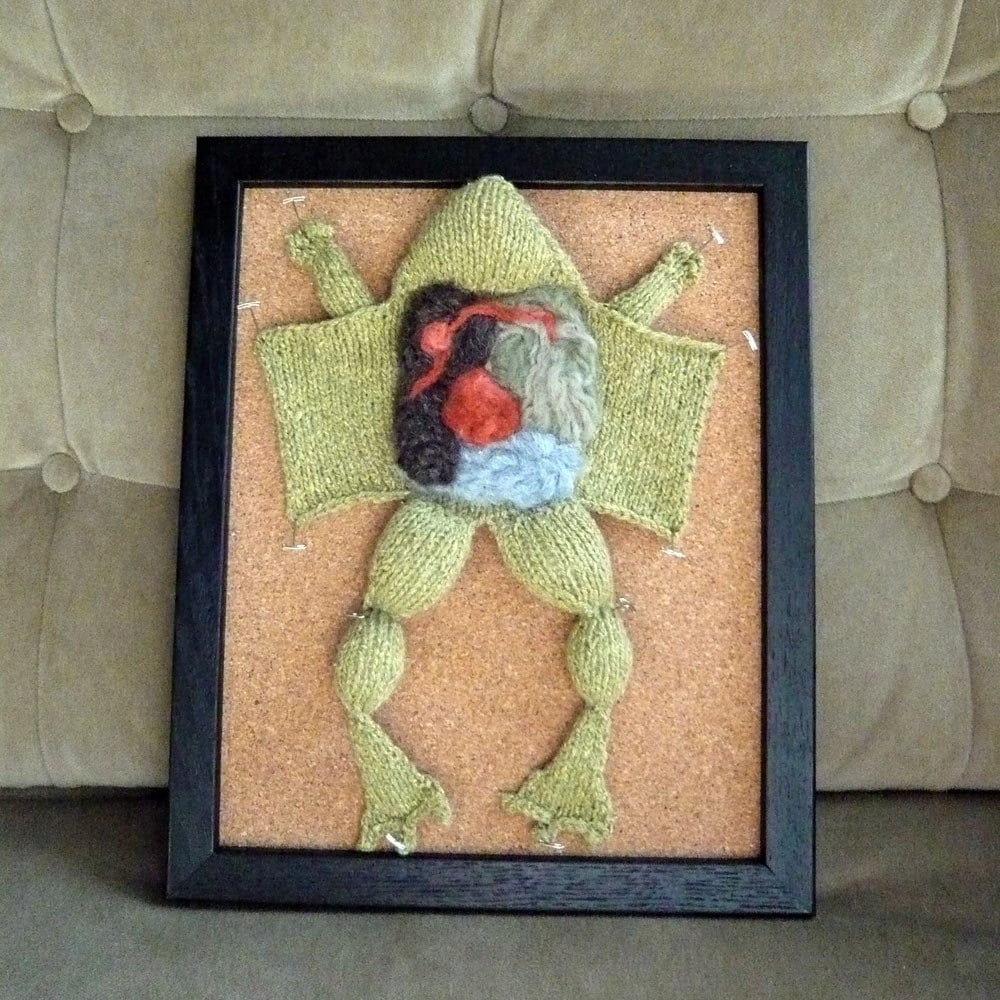
I never liked dissecting frogs in high school, in fact as a zoology major I *still* don't like dissections, but I have to say this is an awesome piece of work. It's titled Knitting in Biology 101. The frog is held on with pins and can be taken apart, I imagine it's a big hit with teachers. I'm very tempted to get one for myself! She also offers the pattern for sale.


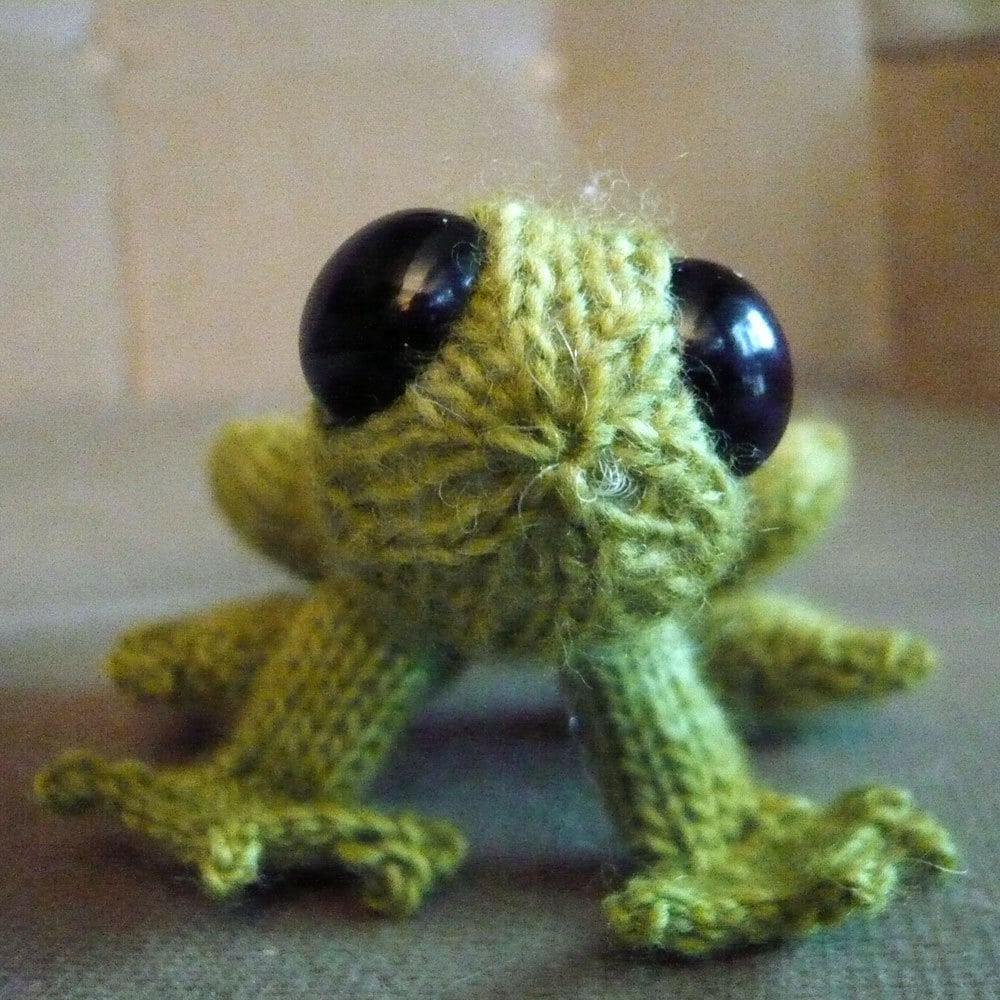
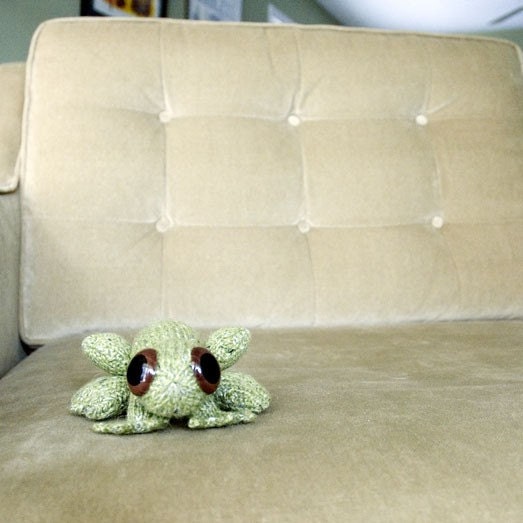
In case you like your frogs alive, there's this little guy called Tiny Prince. I just have to post the close up shot, look at that face!
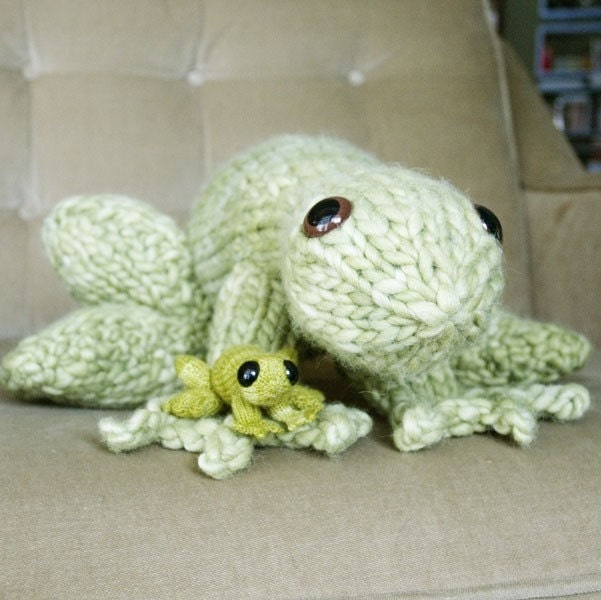
This big guy, Giant Froschkonig, looks super soft and huggable. (the name appears to mean a frog prince).

And one more, a little Froschkonig, I can't resist.
I hope that's enough cuteness to satisfy you all. Next up will be a post with my own photography and some fun facts about froggies.

Even more spiders...

I just got back from a party and what do you know, there are treasury west openings on etsy at 3am!

So here you go, click the picture to go to the actual treasury:

Etsy members included:
jhartphotography
paraphernalia
PhonyArt
countrybugs
PinkBirdBeads
biggirl4664
CraftsGoddess

souldier
cathiefilian
llanywynns
tilleyjewels
patereeves

Thursday, March 6, 2008

Plug board!

Yuppers, I've stuck one on the right hand side of the page (getting a lil crowded over there!). I'd like to keep it with websites and shops that somehow relate to the overall theme of my blog... bugs and nature. Feel free to add your plug if you think your site fits!

I've discovered how to make animated gifs in photoshop, and I'm wasting WAY too much time playing around with it now.

I'm musing about updating with a featured etsy seller sometime tonight, and thoughts have stolen into my head about doing a give-away! Oh yes!

Fun picture I took of a tv remote button... just... for the heck of it.

Wednesday, March 5, 2008

Spiders are winning!


With 40% of the votes in my poll (right hand side of the page),

Here's a treat for all of you who said you are most afraid of spiders:


I'm evil, aren't I? Those are Tip Toe (first two pictures), and Skittle (last picture). They are both Avicularia avicularia, Tip Toe is around four years old, while Skittle sadly passed away last summer from a strange disease.

Tip Toe is quite friendly, a little skittish but I trust her enough to let her crawl all over me (including my face).

I'm always curious about what makes people afraid of certain animals. I know a lot of it has to do with how you're raised. As far back as I can remember my dad has caught little creatures to excitedly show me, so I've always been interested in spiders and bugs and things. With some people it's an innate, unexplainable fear, while for others it's simply the "gross" factor that's placed on certain organisms by society. I bet if spiders became "cool" and popular, somehow, many fewer people would be afraid! I can understand when people have bad personal experiences though, like being bitten or stung by something, or if they're allergic. Thankfully, due to my vigilance even though I play with lots of things I probably shouldn't, I'm very rarely bitten by anything.

Here's some more pictures, just for fun...
Momma wolf spider with an egg case:

Babies! I raised over 30 of those little guys once they left her back, until they were nearly half an inch long. Lots of vials and teeeeensy tiny crickets.
Fishing spider momma. Note how she's carrying her egg sac: with her mouth. For this reason, she became quite thin while guarding her eggs (couldn't eat) and she died shortly after they hatched. They were all released in my mom's garden.
So, generally (at least if you're in northeast north america) if you see a large spider with an egg case, if it's stuck to the abdomen it's a wolf spider, and if it's holding it in it's mouth, it's a fishing spider. Both types are harmless.

Oh, and if you step on a spider babies will NOT explode from her body. Look at the picture with the wolf spider and babies... chances are, they were just sitting on her back, or in an egg case and about to hatch anyway.

And you don't eat ANY spiders in your sleep. It was a statistic made up, on purpose, to prove that people will believe anything spread around the internet. Don't believe me (and all of my entomology professors)? Snopes And think about it. Spiders are terrified of human breath. Next time you see one, blow on it. It'll freak the heck out (makes Tip Toe jump about two feet).

And no, the daddy long legs is NOT the most venomous spider however it's jaws are too small to bite a human. First of all, "daddy long legs" is a common name given to quite a few different creatures, in this case we're talking about harvestmen, which are of the order Opiliones. They're arachnids, but not spiders. The myth often says they're "poisonous" which is false (Poisonous: bad to eat. Venomous: bad if it tries to eat you). They don't have venom, and most barely have fangs to speak of. They are mostly scavengers, though they sometimes hunt down really teensy invertebrates. And some species are capable of biting humans, but it's extremely rare, and won't really do anything to you.

So, I'm curious. Are you afraid of spiders? Why or why not?

Monday, March 3, 2008

Did you miss me?

I'm baaaaack! I had an absolutely wonderful break, lots of fun spent with the boyfriend and pets and family.

I have quite a bit of updating to do here I see. So many things to talk about, so little time!

So I'll start with this. I bought myself a macro lens for my camera, and took some pictures during the week.

This is a close up of one of my snakes, Monty. He's a pink snow corn snake. I measured him (with great diffuculty as he's certainly wiggly) and he's 4 and a half feet long. I got him when he was under a foot, a teensy little thing. He's quite a monster now!


Raaawwwrrrr, dinner time! Here's my pacific island boa (Candoia carinata), Misty, eating her f/t pinky mouse. She used to eat only tree frogs, and has finally in the past year made the switch to mice. She's full grown at just under 2 feet.
More scaly fun - Tiger the kenyan sand boa.
Checkers the eastern milk snake says: "I SNIFF YOU!"
Napoleon, a smaller version of checkers was in blue (about to shed) so no pictures. And my camera batteries died when I went to my boyfriend's place so no pictures of Bijou and Jacques the ball pythons, but they were looking stunning as always.

And here is Buddy, the family bearded dragon. He's still a juvenile, about a foot and a half long. Such a little character.
And of course Pepper. My wittle baybee. He loves me, and I love him, we're bestest buddies. Leaving him behind while I'm at college tears at me the most. He's a caique, a rescue with some attitude, but he's mostly just silly.
That's not even all of them! More updates, features, rants and raves are on their way, don't worry. I currently need to work on unpacking and study for my statistics exam, yuck.