
May he rest in peace. He was only half an inch long when I caught him several years ago, fed him by sweeping my net in the field across the street for little flies, leafhoppers, grasshoppers and caterpillars. He lived for several years before I left him with a friend when I left for college. He reached maturity soon after, and started chirping every night! She would send me pictures of him often. He ended up dying of old age. I really miss that little guy.
Another gray treefrog story: this is Lucifer
 He lived behind a board leaning against one of our sheds in our backyard. He lived in the same spot for three summers in a row! I'd visit him often, sometimes taking him for a ride on my shoulder around the yard. I would catch grasshoppers for him, though I never kept him as a pet. It was much more fun finding him there every day. He was also really good about letting me take pictures of him.
Treefrogs are awesome, but back home I also have a wonderful pond full of bullfrogs, green frogs, pickeral frogs, leopard frogs, and maybe more!
 My butterfly net, made by my grandfather, had multiple purposes. One of them included capturing frogs (as well as anything else that looked interesting in the pond). It was always a fun challenge, and I'd spend nearly every summer day circling the pond. Once I reached my mid-teens and had some money, I bought myself some high quality nets from BioQuip, one butterfly net and one pond net. It had really stunk when my net was all wet, and I saw a butterfly fly by! (My butterfly collection has been photoshopped a bit and is the "banner" at the top of the page).
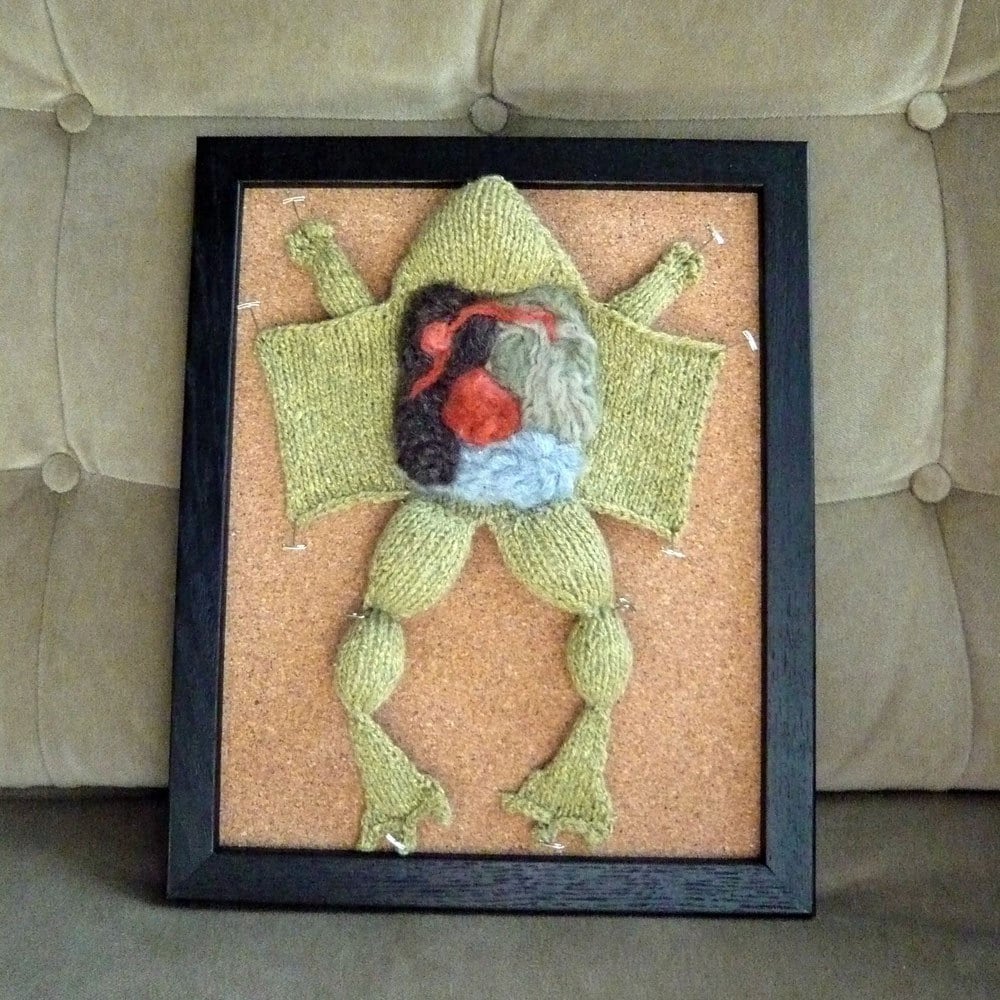
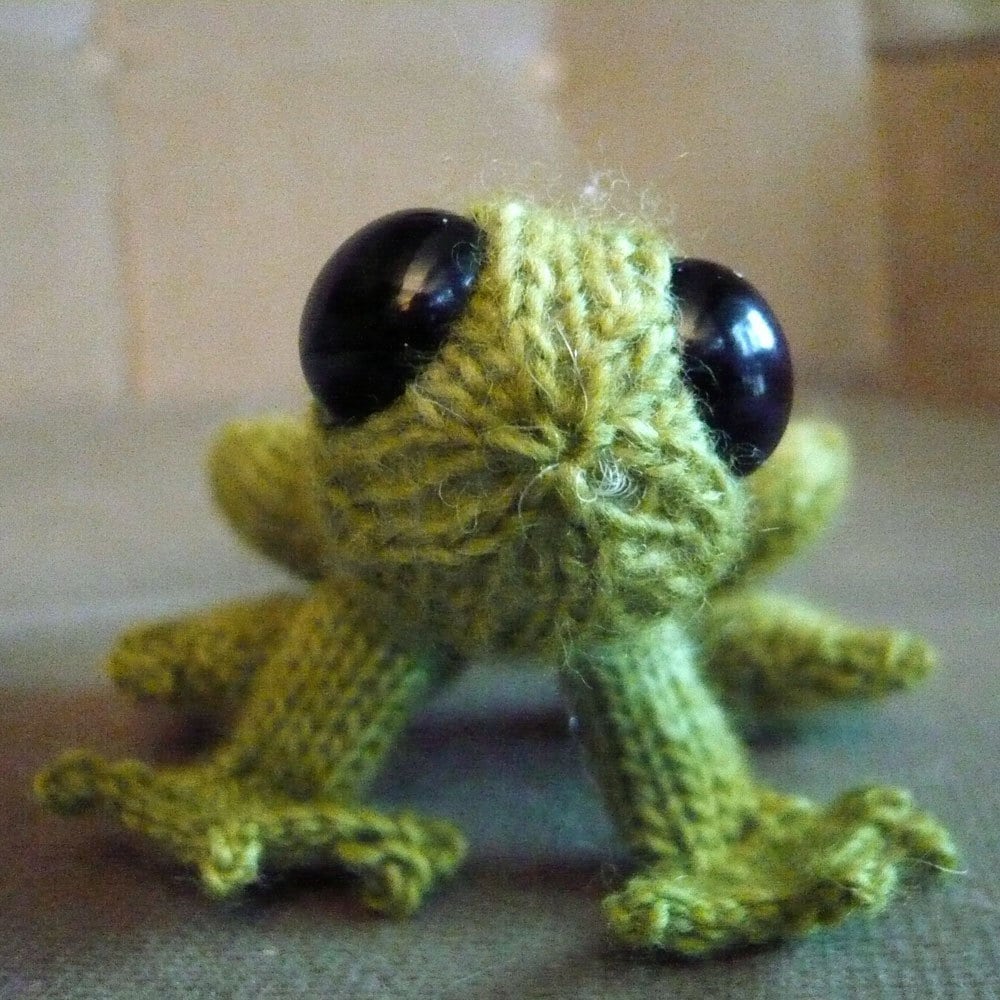
There is so much that could be said about frogs, and I'd like to take a look at mutations, like this one (A plushie I have made and sold):
 There have been many theories about the apparant rise of multiple legs and other deformities in frogs. They're generally known to be environmental indicators, among the first organisms to be adversely affected by pollution and other changes (several other amphibians and insects also work this way). When their numbers start declining, people should take notice before it gets too late.
I've read a book called A Plague of Frogs which I highly recommend. It's accessible to an average reader while still providing good scientific information. They conjecture that pesticides are the most likely culprit for the rash of deformities. This is quite likely, considering we don't know all the affects pesticides could have on animals, and they're dumped into and run off into bodies of water at an alarming rate.
However, doing research for one of my ecology classes, I came across many papers claiming that a tremotode, Ribeiroia ondotrae, causes many of these mutations. In studies they have been found gathered inside the tissues of frogs, concentrated around the deformed areas, and are known to induce mutations if added to a frog's environment. These parasites have a complex life history, with three hosts. Adults live in birds and mammals, and eggs are expelled via the feces of the host. The eggs are then eaten by snails, where they develop into a stage called cercaria. They then leave the snail host, disperse into water, where they look for a tadpole or fish host to burrow into (at this point they are called metacercaria). They are able to mature when the infected animal is eaten by a bird or mammal, and thus completes the life cycle.
With such a complex life cycle, there are many points at which things could be disturbed. In a normal system, these parasites are kept in check. However, due to climate change and human activities, the balance in many areas has been altered. For instance, fertilizers can cause algal blooms in ponds. Snails might love this algae, and thus explode in numbers. If they carry the Ribeiroia parasite, the parasite increases in numbers as well. It can be seen how this will affect the frogs: very badly.
How do mutations help the parasite? Since they need to be passed on to another host, its in their best interest to make it easier for their current host to be captured and eaten. Many parasites work by this principle. Several ant species, infected with parasites in their brain stem, will crawl up blades of grass where they can be eaten by deer or sheep, the next stage of the parasite. In the case of frogs, having extra limbs or missing eyes will make it harder for them to escape predators, making them slower and more conspicuous.
So it's true that pesticides and fertilizers are harming the frogs, just perhaps not directly. However, these parasites haven't explained every single case, and there might be different parasites or other culprits out there. But the bottom line is that these deformities are caused by shifts in ecological balances, due to human activity.
I myself, several years ago, found a baby gray tree frog (Hyla versicolor) with six legs, aptly named Hex:
 If you want any more frog facts or even some silly jokes, here is a fantastic website created by the etsy member laughingstarfish:
AllAboutFrogs